Skillet Cornbread or Pan Cornbread: A Question of Crust
Skillet cornbread or pan cornbread? See how pan shape and preheating affect the crust, then choose the right vessel for crisp edges or a tender middle.
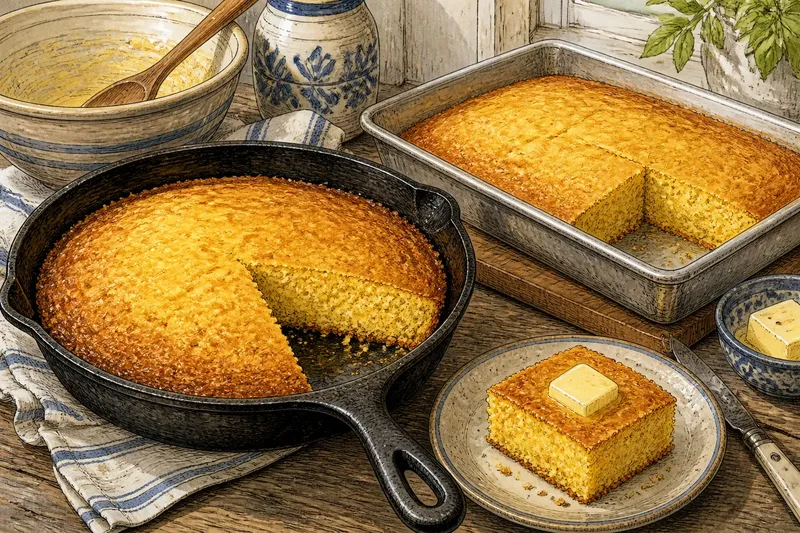
Skillet cornbread gets a crisper, browner base when batter meets a hot pan; cornbread baked in an unheated dish usually has gentler edges. The choice between skillet cornbread and pan cornbread comes down to the texture you want beside supper.
Think of the pan like a coat around the batter: hot, heavy metal sets the outside quickly, while a greased dish gives the edges a softer start. A shallow, wide vessel creates more contact with the bottom and sides; a deeper one leaves more batter cushioned in the centre.
What makes skillet cornbread different from pan cornbread?
“Skillet cornbread” usually means batter baked in a skillet, often cast iron, with the vessel heated first. “Pan cornbread” is a broader description for cornbread baked in a baking tin or dish, commonly without preheating the vessel.
Neither name dictates a single recipe. Cornmeal grind, liquid, added fat and mixing all affect the crumb. To compare pans, keep the batter the same and change only the vessel or whether it is preheated; otherwise, a softer result could come from the mixture rather than the pan.
If a recipe calls for hot fat in a skillet, it is asking for a head start on the crust. If it says to pour batter into a greased dish, expect a gentler bake around the edges.
Why does a preheated skillet make crisp edges?
A preheated skillet gives the batter immediate contact with a hot surface. The underside begins to set as soon as the batter is poured in, helping form a browned base and firm rim before the centre has finished baking.
Cast iron is a familiar choice because it holds heat well and can move from hob to oven. A sturdy oven-safe skillet made from another material may also brown the batter, though the result depends on how well it retains heat. A thin metal tin heats quickly but can lose heat more readily.
Recipes often call for a little fat in the hot pan. Butter adds a rich flavour but can brown quickly; neutral oil lets the cornmeal flavour come through more plainly. If the fat smokes, pause and let the pan cool slightly before adding batter.
A crisp base does not require a dry centre. The crust forms where the batter touches the pan, while the surrounding mixture protects the middle. Still, a shallow layer bakes through quickly, so watch the centre as well as the colour at the edge.
How does pan shape change crust and crumb?
A wide skillet spreads the batter into a relatively shallow layer. More surface touches the hot metal, favouring a browned base and crisp edges, with a thinner middle that sets sooner.
A smaller or deeper pan holds the same batter in a thicker layer. The centre takes longer to set, which can keep it tender, but the sides may brown before the middle is ready. A moderate oven and a pan suited to the recipe help the centre catch up without overdoing the crust.
A rectangular tin creates another pattern: its corners may brown more than the middle of each side, and its straight walls make neat squares easy to serve. A round dish gives wedges, while a deep dish tends to produce a softer, more contained edge.
You do not have to chase the biggest possible crust. A moderate depth can help cornbread hold together in neat wedges; a shallow square tin or broad skillet gives more crisp corners per piece.
Should you heat the fat with the skillet?
Heating fat in the skillet is a common way to prepare the surface for crisp cornbread. Once the oven and pan are hot, add the fat and let it melt. Follow the recipe’s direction to pour it into the batter or leave a thin coating in the pan.
Pouring melted fat into the batter spreads it through the crumb; leaving more in the skillet emphasises the base. Either approach can work. Mix the batter close to baking time so it can go into the oven promptly rather than waiting while the pan heats.
For cornbread in an unheated dish, grease the vessel before adding batter and bake as directed. Glass or ceramic may brown differently from metal or cast iron, so use the recipe’s doneness cues rather than expecting identical colour at the same moment.
Check that your vessel is suitable for the oven and follow its maker’s instructions, especially when moving a hot pan or using it under a grill.
How can you keep the middle tender without losing the crust?
Start with the batter’s consistency and the depth of the pour. Mix only until the dry ingredients are incorporated; vigorous mixing can make the crumb tougher.
Choose a pan that suits the amount of batter. A much wider vessel makes a thinner layer, while a narrower one makes a deeper bake and changes how quickly the centre sets. If the recipe specifies a pan, use one close in shape and size.
Look for a set centre rather than relying on a dark edge alone. The top should look dry, and a tester inserted near the middle should come out without wet batter. A few moist crumbs are different from raw batter; if the centre still looks loose, bake longer and check again.
Let the cornbread rest briefly before cutting. The crumb firms as it settles, making slices easier to lift while keeping the contrast between browned outside and soft middle.
Which pan should you choose for skillet cornbread?
Can you make crisp skillet cornbread without cast iron?
Yes. A sturdy oven-safe metal skillet or suitable metal baking tin can brown cornbread, especially if preheated as the recipe directs. A lighter pan may not hold heat as well, so its crust may be less pronounced.
Will a glass dish give cornbread a crisp bottom?
It can brown the base, but glass behaves differently from preheated cast iron or metal. A greased glass dish suits a softer, even bake; for a deliberately crisp skillet crust, choose a pan made for preheating and handle it as directed.
Why is the edge brown while the centre is still soft?
The edge is thinner and touches the hot pan directly, so it sets first. If the centre is still wet, continue baking until it sets; next time, use a slightly deeper pan or a gentler oven setting if the crust is racing ahead.
Can you reheat cornbread and bring back its crust?
A dry skillet over gentle heat can refresh the cut surface and warm a slice; an oven can warm a larger piece more evenly. The crumb may not return to its freshly baked texture, so reheat only what you plan to serve.
What should you check before choosing a cornbread pan?
- Check whether the recipe calls for a preheated skillet; if it does, use an oven-safe pan that can be heated, or choose a greased dish and expect a softer crust.
- Check the recipe’s stated pan size against the vessel you have; if it is much wider, expect a thinner bake and watch the centre earlier, or use a closer-sized pan.
- Check whether you want a browned base or even, soft edges; if crust is the priority, preheat a sturdy skillet as directed, or use an unheated greased dish for a gentler bake.
- Check the vessel’s material and oven instructions; if it is not rated for the heat or hob-to-oven transfer, use a suitable oven-safe pan instead.
- Check whether the batter fills the pan shallowly or deeply; if it is spread thin, watch for quick browning, or transfer it to a narrower vessel for a thicker centre.
- Check the centre for wet batter before serving; if a tester comes out with raw mixture, bake longer and check again, or remove the cornbread once the middle is set and the tester shows only moist crumbs.
Which style suits the meal?
Skillet cornbread suits a meal where a browned base and crisp rim are welcome beside beans, greens or a bowl of stew. Pan cornbread is handy when you want even squares for sharing or softer edges alongside a delicate dish; it also travels easily in its baking tin.
Say you have a familiar batter, a preheated cast-iron skillet and a pot of vegetable soup. You pour the batter into the lightly oiled skillet and bake it as directed; the expected result is a firmer, browner underside and a tender centre, provided the layer is not spread too thin. If neat squares and a softer edge matter more, you instead grease a rectangular tin, pour in the same batter and bake it as directed; the trade-off is less dramatic crust for easier, more even portions.
For skillet cornbread or pan cornbread, decide whether you want crust to lead or simply frame the soft middle. Preheat a suitable heavy skillet when crisp edges are the priority; choose a greased baking dish for a gentler, more uniform slice. Check the centre before cutting, since a browned rim alone cannot tell you whether the middle has set.