From Field Peas to the Southern Table
Field peas carry a layered Southern food history; trace how varieties, growing seasons and kitchen habits shaped their place at the table.
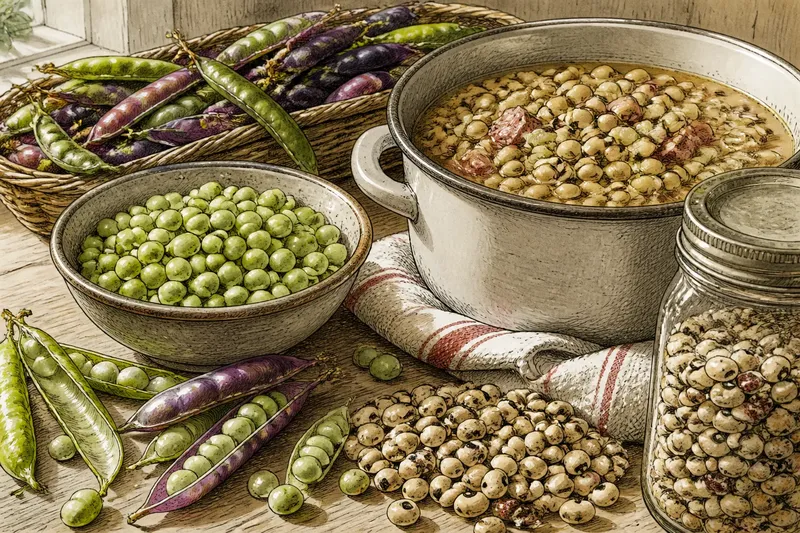
Field peas carry a Southern food history shaped by movement: seeds travelled, varieties adapted, and cooks turned harvests into meals suited to the season. The phrase “field peas” covers several kinds of cowpeas, including black-eyed peas, crowder peas and cream peas, rather than one fixed bean with one unchanging recipe.
That variety is part of the story. A pot of dried peas and a bowl of fresh peas in their pods may share a name, yet they belong to different moments in the crop’s journey and invite different kinds of cooking. Follow that journey—from field to market to kitchen—and the place of peas in Southern foodways becomes easier to see without reducing it to a single origin story.
What does “field pea” mean in Southern cooking?
Field pea is a broad everyday name for cultivated cowpeas and their close culinary kin. Black-eyed peas are familiar in many households, but the family also includes crowder peas, whose seeds sit tightly together in the pod, and cream peas, which tend to be pale and mild. Purple hull peas are another familiar Southern variety, named for their coloured pods.
Names vary by place, seed source and family habit. A cook might use “field peas” as a general term, while a neighbour distinguishes a particular pea by its colour, shape or hull. These names preserve practical knowledge: how a plant grows, when its pods are ready and how its peas behave in a pot.
Cowpeas have long histories in African agriculture and food cultures, though the details vary across places and periods. Enslaved Africans brought agricultural knowledge with them through forced migration, and cowpeas became part of Southern farming and cooking. This history should not be reduced to a simple tale of exchange: it was shaped by violent displacement, while the labour and skill of enslaved people were often denied recognition.
How did peas move from fields into kitchens?
Field peas suited warm growing conditions and could provide food for people as well as useful fodder. In the South, they became part of mixed farming rather than a crop isolated from household life. Families might grow peas in garden plots or fields, save seed and eat them fresh when the pods filled out. Some peas could also be dried for later meals.
That seasonal flexibility mattered. Fresh peas offered a tender, short-lived harvest; dried peas could wait in storage. The same crop therefore appeared in more than one form across the year, shaped by planting, gathering and keeping food.
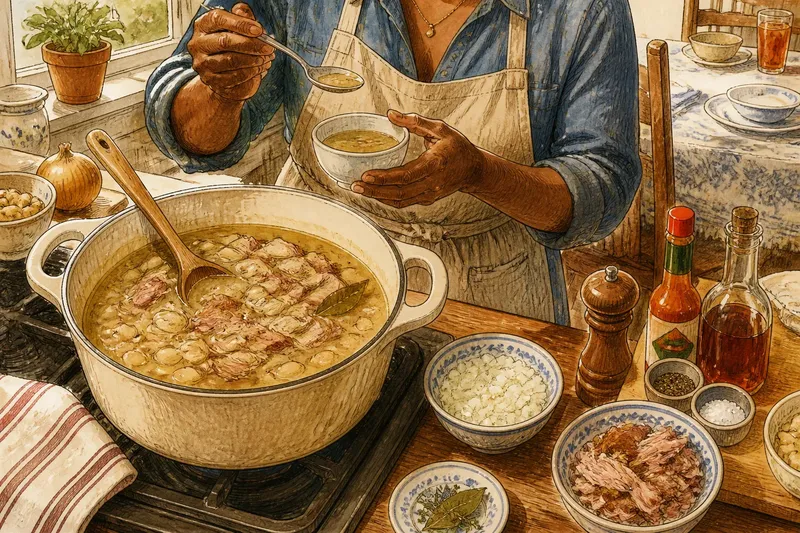
In kitchens, cooks made peas into a meal with what was close at hand. Fresh peas might simmer with onion, a little smoked meat or a piece of salt pork; dried peas often needed soaking or a longer, gentler cook. Broth, pot liquor, rice, cornmeal and greens could turn a pot into the centre of supper. These habits were not uniform: household resources, local harvests and inherited preferences all mattered.
Imagine a family with a small patch of purple hull peas and a jar of saved seed. They pick tender pods for supper, shell them and cook the peas fresh; later, they leave more pods to dry and store. The observable result is two different meals from one crop, each suited to a different point in the season.
Why are there so many varieties and names?
Field pea diversity reflects both plant adaptation and human choice. Farmers and gardeners kept seed from plants that suited their soil, climate, harvest habits or preferred texture. Over time, local names could mark a familiar strain even when another place used a different label for a similar pea.
Varieties also differ in ways cooks notice. Some shell easily; some have a fuller, starchier texture; others cook into a softer pot. Colour can range from pale green to deep purple in the hull, while the peas themselves may be pale, speckled or dark-eyed. These traits explain why a recipe can behave differently with another variety; none makes one kind more authentic than another.
Seed saving kept local knowledge close to home, while markets and changing agricultural systems carried varieties farther afield. Farmers’ markets, seed catalogues and garden exchanges can bring several kinds to one table. A label may identify a variety, but freshness and whether peas are fresh, frozen or dried also affect cooking time and texture. Follow the grower’s or package directions where supplied.
How did field peas become a foodway rather than a single dish?
A foodway is more than a recipe: it includes growing, gathering, sharing and remembering food. Field peas fit that wider pattern because their use connects cultivation to household work. Shelling peas by hand at a kitchen table or porch could accompany conversation. Drying and storing them made a seasonal crop available beyond the harvest.
Peas also travelled through different social and economic settings. They fed farm families and labourers, appeared in everyday meals, and became part of regional markets and restaurant cooking. Those paths overlap, but they are not interchangeable. A dish presented as a regional speciality may draw on knowledge developed in ordinary kitchens, where thrift and seasonal availability shaped what went into the pot.
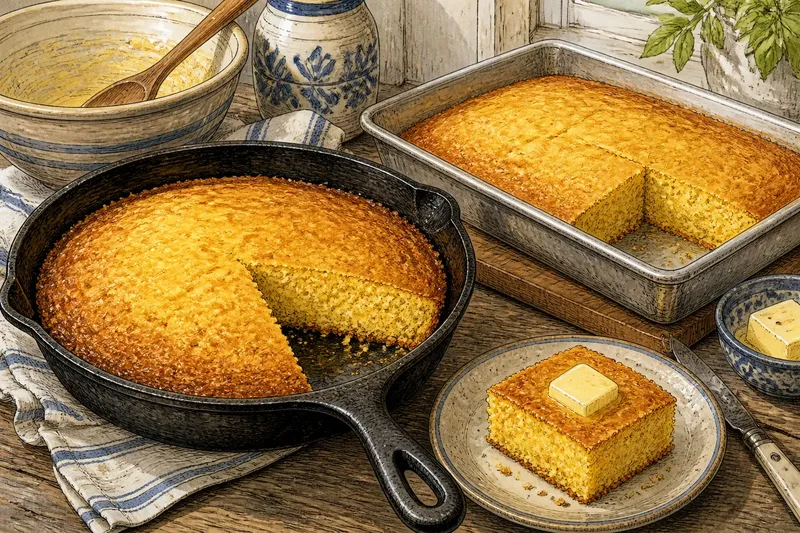
Rice and peas, peas served beside cornbread, and peas cooked with greens are combinations found across Southern tables. Their presence varies by community and household. The point is not that every Southern cook uses the same accompaniments, but that peas have been adaptable enough to sit beside foods with their own histories.
What should a cook know about choosing field peas?
Are black-eyed peas the same as all field peas?
No. Black-eyed peas are one familiar kind within the wider field-pea family. Crowder, cream and purple hull peas offer other shapes, colours and textures.
Can fresh and dried field peas be used in the same way?
They can appear in similar dishes, but need different treatment. Fresh peas generally cook more quickly, while dried peas may need soaking and a longer simmer.
Why do cooks give the same pea different names?
Regional speech, seed history and local growing habits all shape names. A name may refer to a variety in one community and serve as a broader category in another.
What does the cooking liquid contribute?
As peas cook, flavour and some starch enter the liquid. Pot liquor can be served with the peas or used to moisten rice, greens or cornbread.
What does the field-pea story leave on the table?
Field peas remind us that Southern cooking was never simply a collection of fixed recipes. A crop’s varieties, its storage form and the people who carried its knowledge all shaped what appeared at supper. Like a well-used wooden spoon, a food tradition takes its character from repeated handling, not from one display case.
When field peas appear at a market or in a family kitchen, ask what kind they are and whether they were picked fresh or kept dry. Those details open a larger history of African agricultural knowledge, Southern adaptation and everyday cooks making a harvest last. The name on a basket may be only the beginning; asking how the peas were grown and kept can reveal which part of that history a particular meal carries.