The Myth of One Proper Way to Season a Pot
The myth of one proper way to season a pot gives way to a better habit: taste the ingredients, adjust in stages and honour the people at your table.
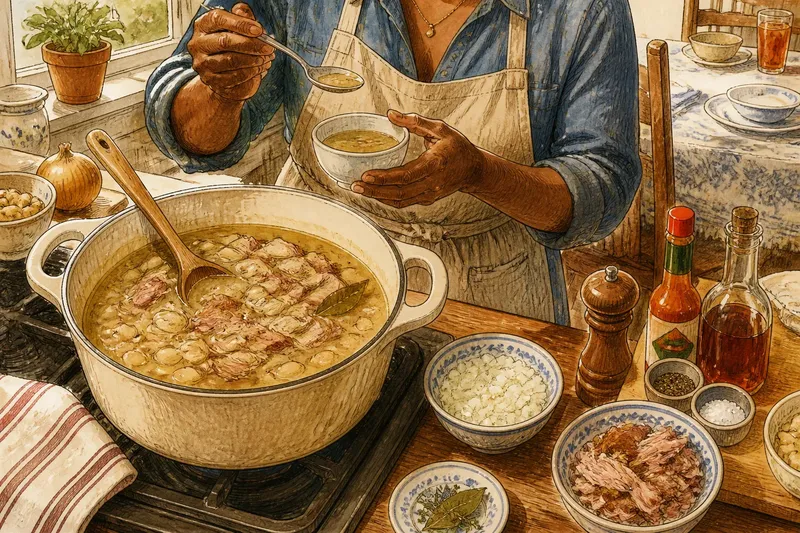
The myth of one proper way to season a pot falls apart as soon as the ingredients change. A pot of greens made with smoked turkey, one made with a ham hock and one cooked without meat may each need a different hand with salt, pepper and acidity. In Southern kitchens, seasoning is less a fixed formula than a conversation between what is in the pot and who will eat it.
Imagine that Lena is cooking a pot of butter beans for a family supper. Her starting point is a bag of dried beans, onion, a bay leaf and a piece of smoked turkey; her aunt prefers a gentle broth, while her brother reaches for hot sauce. Lena decides to taste as she goes rather than follow a relative’s remembered measurements. The likely result is a pot with a clear bean flavour, enough savouriness to satisfy her aunt and room at the table for her brother to make his own bowl hotter.
Why does a single seasoning formula fail?
Seasoning depends on more than the cook’s preferred ratio of salt to pepper. Dried beans absorb liquid as they soften, smoked meat brings its own salt and savouriness, and onions release sweetness into the broth. Even two bags of the same ingredient can differ in age, storage and flavour.
That is why a recipe’s seasoning amounts are better treated as a starting point than a verdict. A spoonful that works in a small pot of fresh vegetables may disappear in a deeper pot with beans and meat. The cook’s task is to notice what the ingredients are doing, then make a measured adjustment.
Household preference matters just as much. One family may want a peppery broth; another may prefer the flavour of the beans and onion to stay in front. Neither preference makes the other pot less Southern. A familiar method can carry memory and affection, but it is not the only legitimate one.
What does Lena taste for before adding salt?
Lena begins by considering where the flavour is coming from. Smoked turkey can contribute salt, smoke and body, while the onion gives a softer sweetness. The beans themselves have a mild, earthy taste, so a strong addition can easily take over rather than make the pot more complete.
She also considers what will accompany the beans. If supper includes salted meat or a strongly seasoned side, the broth need not carry all the seasoning. If the beans will be served with plain rice or bread, a little more savouriness in the pot may make the meal feel balanced.
It helps to think of salt like a dimmer switch rather than an on-off button: small changes let the flavour come into focus without overwhelming it. Lena can add a little, stir, give the broth time to settle and taste again. A large early addition is harder to undo, especially when smoked meat is already lending salt to the liquid.
She keeps the other seasonings in view, too. Black pepper adds warmth; a pinch of dried thyme can bring an herbal note; a bay leaf gives a quiet background flavour. None is compulsory. The right question is whether the pot needs that particular flavour, not whether a proper cook is expected to add it.
How does the pot change as it cooks?
At the beginning, Lena’s broth tastes thin and separate: onion, water, beans and smoke are present, but they have not yet become a single dish. As the beans soften, their starch thickens the liquid and their flavour spreads through it. A seasoning decision made early can therefore taste different later.
She avoids trying to fix a developing pot with several additions at once. If she adds salt, pepper and vinegar together, she will not know which change helped. Instead, she gives each adjustment a chance to show itself. This is not a rigid technique; it is a way of staying attentive to the pot.
When the beans are tender, she tastes the broth again. The smoked turkey may have become more prominent as its flavour moved into the liquid, while the beans have made the broth feel fuller. If it now tastes savoury but flat, Lena might add a small splash of cider vinegar or a squeeze of lemon at the table. Acidity can sharpen a rich dish without making it taste simply saltier.
That final choice depends on the pot. Vinegar is not a required correction, and a broth that already tastes bright may need none. A cook can also offer an acidic condiment separately, letting each person decide how much belongs in their bowl.
What can Lena adjust without changing the whole pot?
One useful lesson from Lena’s supper is to separate the pot’s shared seasoning from individual heat. She keeps the beans relatively mild, then puts hot sauce and black pepper on the table. Her brother can season his own serving, while her aunt does not have to work around chilli stirred into every spoonful.
That approach is useful whenever preferences differ, but it is not the only way to cook for a group. A household that enjoys the same heat may want pepper or chilli cooked into the broth. The point is to choose deliberately, rather than treating a particular spice as proof of authenticity.
Lena can also make a small change to her own bowl before altering the pot. A spoonful of broth in a cup gives her a chance to see whether vinegar brightens the flavour, or whether the dish would be better left alone. If the trial tastes right, she can add a similar amount to the main pot, stir and taste once more.
Which seasoning questions come up most often?
When should salt go into a pot of beans?
There is no single timing rule that suits every recipe, bean and pot. Lena lets the beans begin to soften and tastes the broth before adding salt, because the smoked turkey is already contributing savouriness.
Can a Southern pot be good without smoked meat?
Yes. Onion, herbs, pepper and a finishing splash of vinegar can help build flavour in a meatless pot, though the result will not taste like one made with smoked turkey or ham. Lena would taste the beans and broth, then choose additions that suit that base.
How can a cook fix a pot that tastes too salty?
Adding plain unsalted liquid or more unsalted ingredients may soften the salty impression, though it can also change the pot’s texture and concentration. A spoonful of vinegar will not remove salt, so Lena would not rely on acidity as a cure.
Does every pot need heat or acidity?
No. Heat and acidity are options, not a required pair. Lena serves hot sauce separately and adds vinegar only if the cooked beans seem to need a brighter edge.
What does the finished pot teach?
At supper, Lena serves the butter beans with their broth, then leaves hot sauce and vinegar within reach. Her aunt enjoys the gentle smoke and soft beans; her brother adds heat to his bowl. The pot is not a compromise that satisfies nobody. Its shared flavour is complete enough to eat, while the table offers small choices that do not require Lena to cook two separate meals.
The result also gives Lena useful information for next time. If the broth tastes too smoky for her aunt, she can use less smoked turkey or choose a milder base; if the beans feel dull beside plain rice, she can build more savouriness into the pot. These are observations about this household and these ingredients, not rules for every Southern kitchen.
There is a difference between a treasured family practice and a universal standard. A relative may know exactly how much pepper belongs in the pot they have cooked for years, yet that knowledge is tied to their ingredients, stove, habits and diners. Listening to that experience can teach a cook what to notice without requiring an exact imitation.
The myth of one proper way to season a pot makes ordinary variation sound like failure. Lena’s beans show another possibility: start with what is actually in the pot, taste again as it changes and make room for the people who will share it. If a household has a preferred formula, keep it as a useful inheritance; if the ingredients or diners differ, let the seasoning differ too.
Next time a pot tastes unfinished, pause before adding another pinch of salt. Ask whether it needs more savouriness, a little warmth, a brighter edge or simply more time to cook. That question leads to a decision grounded in the food in front of you, rather than a rule that was never meant to fit every kitchen.